
Top 7 Common Room Alternatives for GTM Teams in 2026
Common Room is an AI GTM platform that combines buyer intelligence, enrichment, signals, AI agents, and embedded workflows in one system, built to help revenue teams identify buyers, research accounts, and activate GTM plays across the tools where they work. It's a capable platform for signal-based go-to-market motions, but as teams grow, many find they need broader outbound execution, larger contact databases, or more predictable pricing than what a signals-first platform delivers out of the box.
That's why sales leaders, RevOps teams, and GTM Engineers are actively researching Common Room alternatives in 2026. Whether the driver is cost predictability, a need for native dialer and multi-channel sequencing, or a larger verified contact database, the right replacement depends on what your team actually executes day to day: intent signals, outbound sequences, enrichment, or all three in one workspace.
This guide breaks down seven strong alternatives, starting with Apollo, an AI GTM system that unifies data, intelligence, and execution, followed by six specialized platforms across intent data, predictive scoring, and revenue intelligence. We'll cover pricing, features, and who each tool fits best so you can make an informed decision.

Apollo Ends Hours Of Manual Lead Digging
Still verifying emails and digging up contact info by hand? Apollo surfaces 240M+ verified contacts with 98% email accuracy, so reps spend time selling instead of searching. Give your team hours back every week.
Start Free with Apollo →Key Takeaways
- Apollo: Combines B2B sales intelligence, multi-channel engagement, and AI-powered execution in one system, with plans starting at $49/user/month.
- 6sense: Revenue intelligence platform built around intent data, predictive modeling, and account-based orchestration for marketing and sales teams.
- Bombora: Intent-data specialist powered by a consent-based Data Co-op, focused on Company Surge® topics and buying-group insights.
- Pocus: AI sales-intelligence platform for enterprise GTM teams that unifies CRM, product-usage, and intent signals into prioritized actions.
- MadKudu: Predictive lead-scoring and customer-intelligence platform focused on fit, intent, and behavioral signals for prioritization.
- Warmly: AI-assisted platform for website visitor identification, inbound chat, and outbound orchestration based on intent signals.
- ZoomInfo: B2B data and go-to-market platform with contact databases, engagement tools, and buying-intent signals across sales, marketing, and talent products.
Apollo
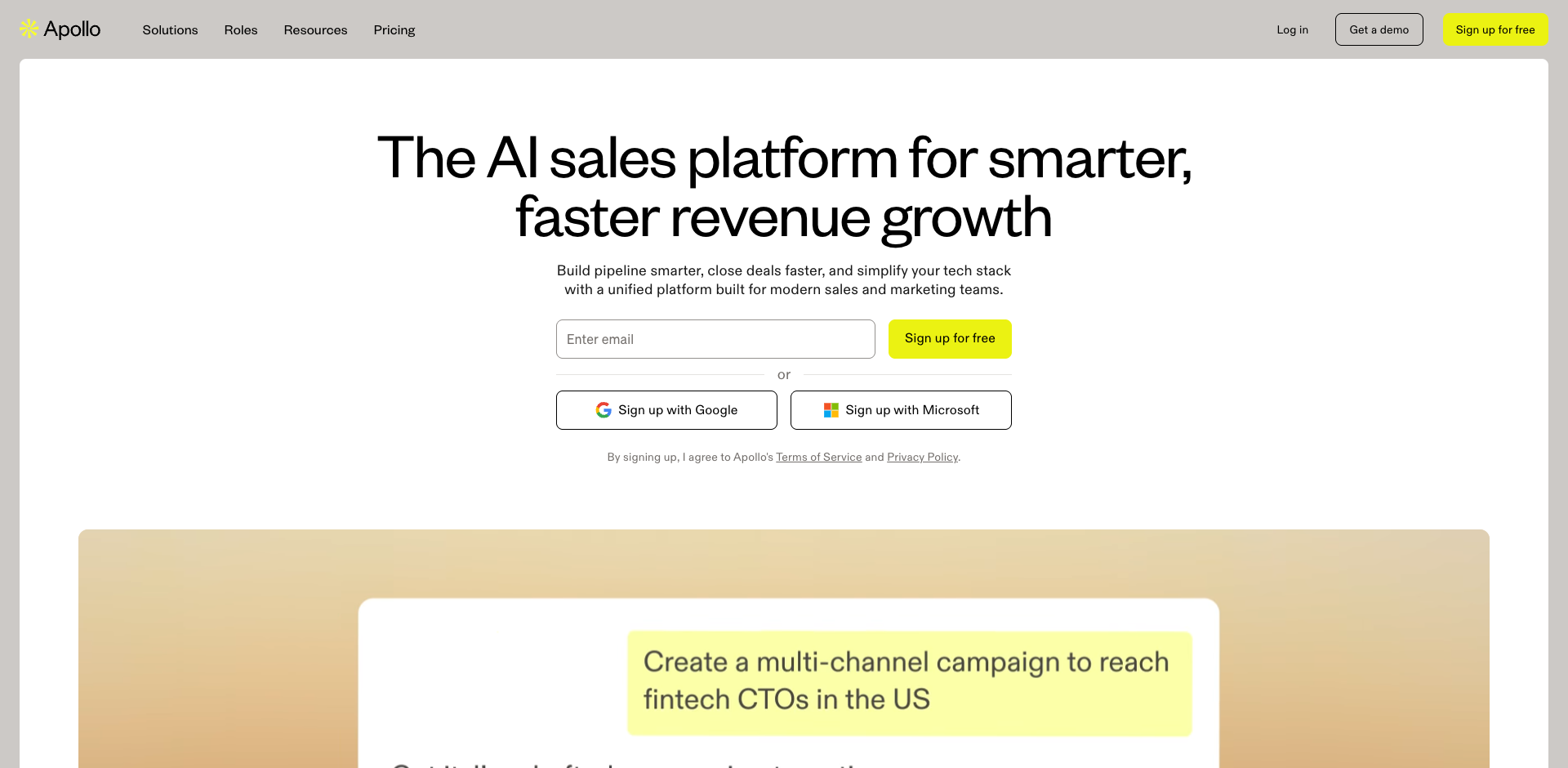
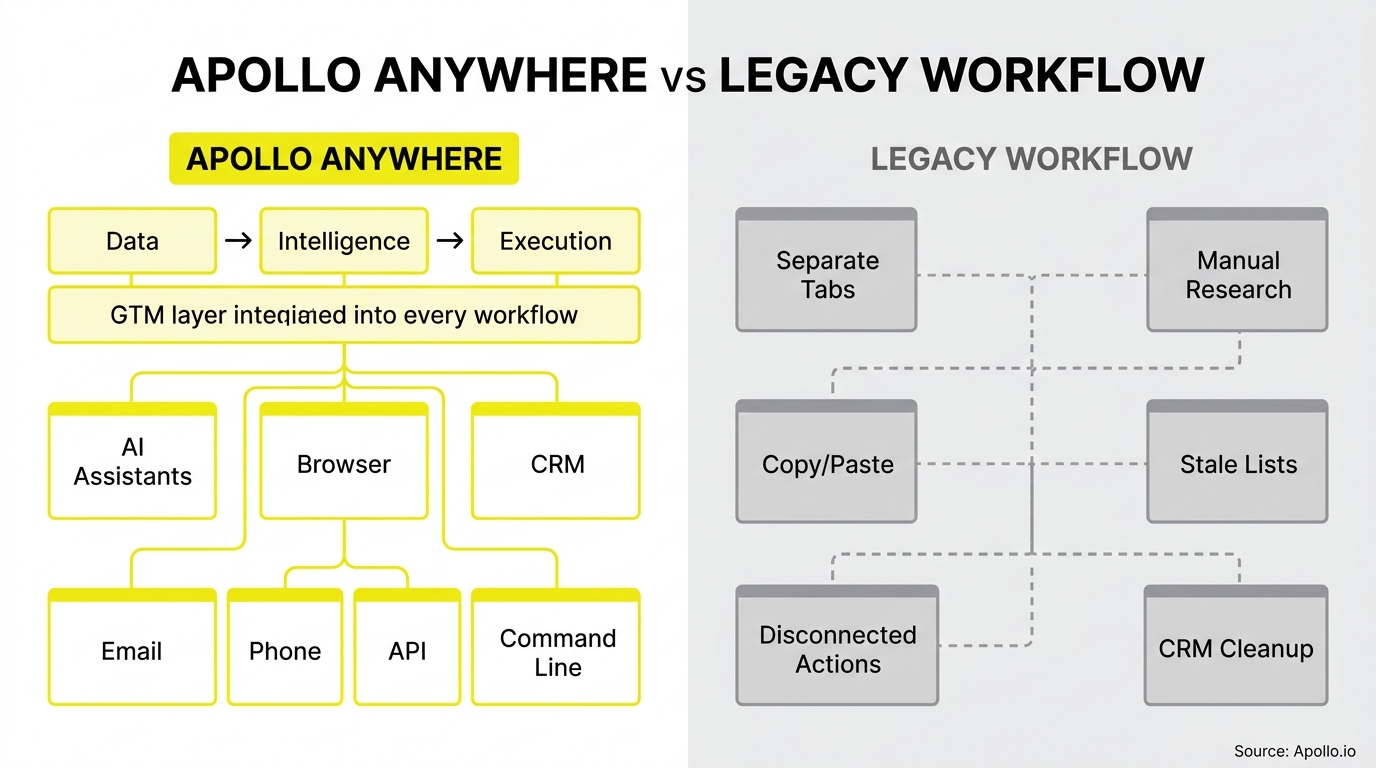
Apollo is an AI GTM system that unifies data, intelligence, and execution. Built open by design, Apollo meets sellers inside the tools they already use, from AI assistants like ChatGPT, Codex, Claude, and Perplexity via Apollo MCP, Apollo's Model Context Protocol, to the Chrome extension and Salesforce, rather than asking teams to switch contexts to get value. For technical and advanced users, Apollo CLI provides terminal-native access for headless GTM workflows.
Apollo Outbound turns a defined audience into conversations: AI Assistant finds, researches, and ranks accounts and contacts, verifies emails and phones, and monitors sender health, while multi-channel sequences run across email, calls, and social with Power Dialer and Parallel Dialer for efficient calling. Apollo Inbound captures website interest through visitor identification and form enrichment, routes leads with AI-simplified routers, and nurtures with owner-led AI sequences. The Apollo B2B database includes 240M+ people with 98% email accuracy, continuously validated and refreshed by Apollo's Living Data Network rather than treated as a static snapshot. Apollo Data Enrichment adds waterfall enrichment, CRM enrichment with bi-directional sync, and API access for bulk enrichment jobs, while 50+ integrations connect Apollo to Salesforce, HubSpot, Outreach, SalesLoft, and more.
Apollo's pricing, detailed on the official pricing page, includes a Free plan ($0, 900 credits/year, 2 sequences), Basic at $49/user/month (30,000 credits/year, unlimited sequences, CRM integrations), Professional at $79/user/month (48,000 credits/year, US dialer, 5 mailboxes, AI research), and Organization at $119/user/month with a 3-seat minimum (72,000 credits/year, international dialer, 15 mailboxes, SSO). All paid tiers reflect annual billing, which saves 20% versus monthly rates.
Customers describe the impact of consolidating their stack around Apollo. Kevin Warner, CEO at Leadium, said: "Apollo became the single source of truth for us—where everything originates from and where all the data returns to." Collin Stewart, CEO at Predictable Revenue, added: "We're getting higher reply rates, open rates are doubled, meetings are up, speed to book is cut in half...it's the platform for people who want to do more." And Mark Turner, VP of Revenue Operations at Built In, noted: "Apollo enriches everything we have: contacts, leads, accounts...And we don't really have to touch it, it just works."
According to Ramp's vendor data, Apollo holds the #1 new adopter rank among Sales Data Providers as of September 2026, capturing 26% of first-time category buyers. Mid-market companies represent Apollo's largest tracked customer segment by company size, and enterprise adoption rose from 26% in January 2026 to 31% in July 2026. Apollo serves B2B GTM teams across startups, growing teams, mid-market, and enterprise.

Beyond the vendor-level numbers, Ramp's Sales Data Providers category data shows Apollo as the fastest-growing vendor in the category as of September 2026, averaging the highest month-over-month adoption growth among tracked competitors. That category-wide momentum reflects teams actively moving toward consolidated GTM platforms rather than point solutions.

Apollo has earned a 4.7/5 G2 rating and 624 badges in G2's Winter 2026 Report, along with the 2025 MarTech Breakthrough Award for "Best AI-Powered Sales Solution". Apollo serves B2B GTM teams, GTM Engineers, and AI Builders building headless GTM workflows with the Apollo API, CLI, and MCP, alongside Sales Professionals, SDRs/BDRs, AEs, RevOps, Marketing, and Revenue Leaders.
6sense
6sense is a B2B revenue intelligence platform that turns buyer signals, intent data, account context, and AI-driven predictions into guidance for marketing and sales teams. Its Signalverse unifies first-party and third-party buying signals, while predictive modeling identifies buying stage and revenue potential across accounts.
Key features: AI-powered intent analysis with custom keyword tracking, dynamic audience building with 80+ segmentation filters, account and identity resolution for anonymous website visitors, and RevvyAI, a chat interface for account research and meeting preparation.
Pricing: 6sense's pricing is not publicly displayed on their official website. According to Vendr, the median buyer pays $63,199 per year, based on data from 383 purchases, with a $63,199 Median Avg Contract Value and 204 deals handled.
Pros:
- Combines intent data with predictive buying-stage modeling for account prioritization
- Offers 80+ segmentation filters for dynamic audience building
- Includes an AI chat interface (RevvyAI) for account research and sales strategy
Cons:
- Pricing is quote-based and driven by TAM size, modules, and data packages, requiring a sales conversation to scope costs
- Module add-ons for advertising and advanced integrations carry additional costs
- Implementation and professional services are typically quoted separately
Apollo vs 6sense, here's everything you need to know.
Bombora
Bombora provides B2B intent data and related solutions that help sales and marketing teams identify accounts actively researching products, understand the buying group, and prioritize engagement. Its portfolio combines Company Surge® intent data, identity enrichment, B2B digital audiences, and campaign measurement, powered by a consent-based Data Co-op.
Key features: Company Surge® intent data that maps account activity across the buyer journey, buying-group and persona-level insights, Visitor Insights identity resolution for website traffic, and B2beacon campaign measurement for account-level engagement metrics.
Pricing: Bombora's pricing is not publicly displayed on their official website. According to Vendr, the median buyer pays $25,000 per year, based on data from 35 purchases, with pricing driven primarily by Company Surge® topic volume, API calls, and integration complexity.
Pros:
- Consent-driven Data Co-op sources signals across thousands of B2B publishers and websites
- Provides persona-level insights into who at an account is researching
- Offers dedicated campaign measurement through B2beacon
Cons:
- Pricing is usage-based and tied to data consumption, which can make costs variable as usage scales
- Audience Solutions and API access are typically quoted and billed separately from core Company Surge® data
- Focused primarily on intent data rather than full outbound execution
Explore the Apollo vs Bombora breakdown.
Pocus
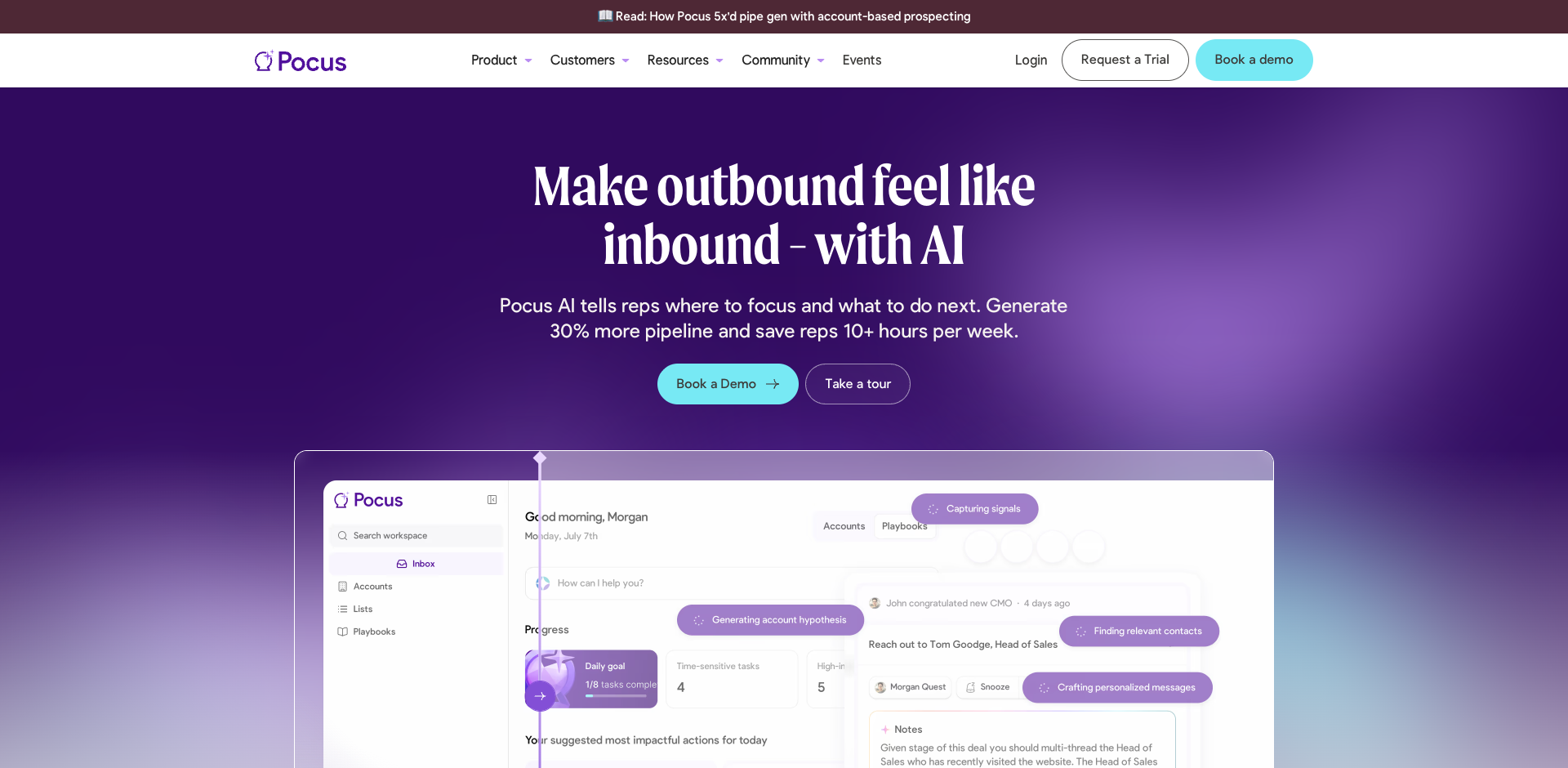
Pocus is an AI sales-intelligence platform built for enterprise go-to-market teams. It unifies CRM, product-usage, and intent signals to prioritize accounts, recommend contacts, generate plays and messaging, and guide reps toward next-best actions through an Intelligent Inbox.
Key features: AI agents for account and person-level research, AI scoring for intent, ICP fit, and account health with explainable scores, a visual play builder that turns triggers into prioritized rep tasks, and integrations with CRM, sales engagement platforms, and 100+ GTM tools.
Pricing: Pocus's pricing is not publicly displayed on their official website. According to Vendr, the median buyer pays $58,032 per year, with a displayed range between $39,800 and $275,832.
Pros:
- AI agents handle account and contact-level research across internal and external data
- Explainable scoring helps reps understand why an account or contact is prioritized
- Includes a Chrome extension and integrates with 100+ GTM tools
Cons:
- Official pricing isn't listed; teams join a waitlist or contact sales for a quote
- Built primarily for enterprise GTM teams, which may mean more implementation complexity for smaller teams
- Focused on scoring and prioritization rather than a built-in contact database
Compare Apollo and Pocus side by side.

MadKudu
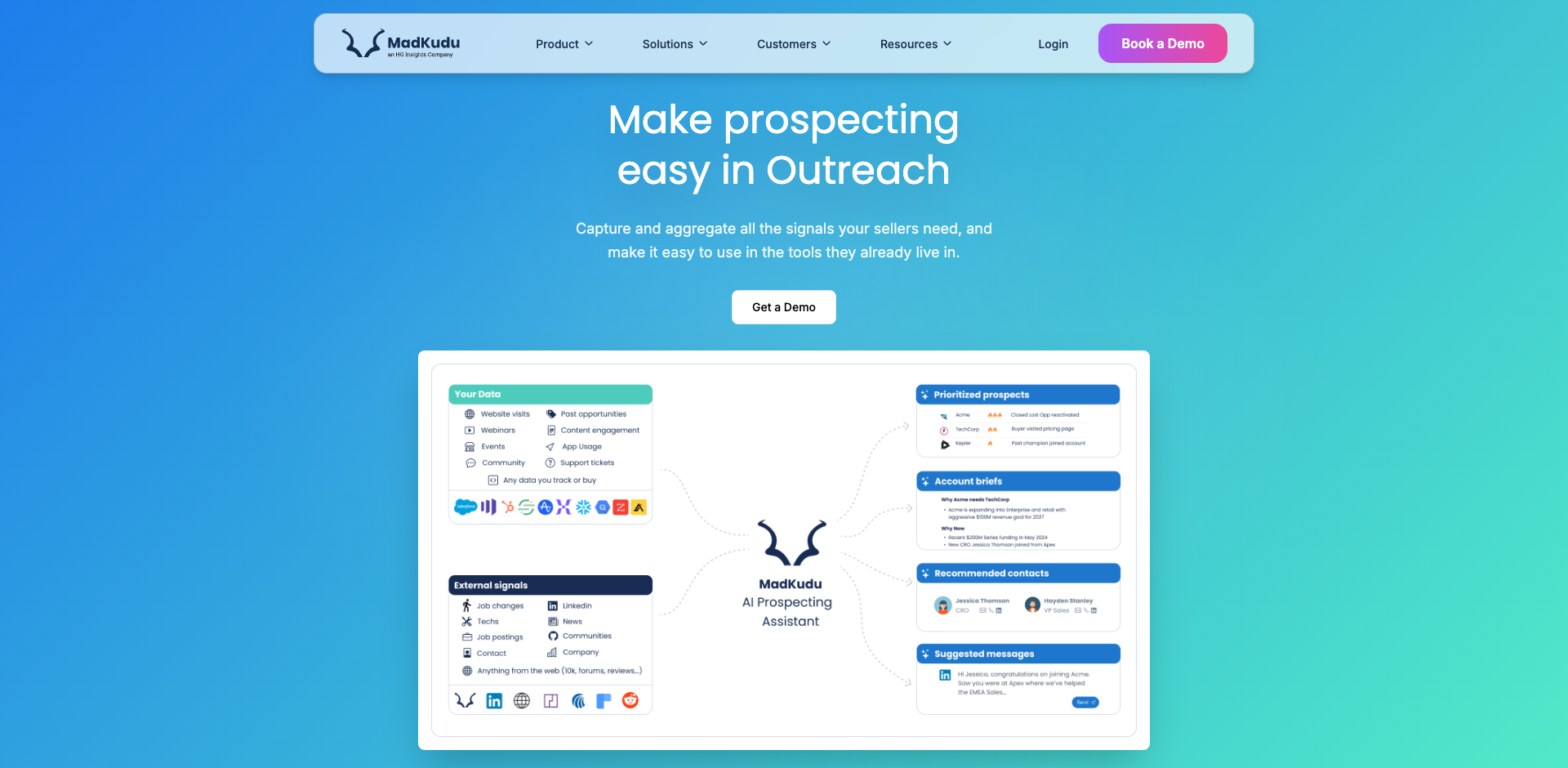
MadKudu is a predictive lead-scoring and customer-intelligence platform for B2B go-to-market teams. It analyzes product, behavioral, firmographic, and intent signals to prioritize leads and accounts, trigger sales plays, and surface insights inside existing CRM and sales workflows.
Key features: Predictive lead and account scoring using fit, intent, and product-usage signals, signal-based selling with automated alerts, AI-automated sales plays and custom playbooks, and 360-degree views combining first-, second-, and third-party signals inside Salesforce.
Pricing: MadKudu's pricing is not publicly displayed on their official website. According to Vendr, the median buyer pays $33,644 per year, based on data from 40 purchases, with deployment profiles ranging from $25K–$60K for core lead scoring up to $100K+ for enterprise or custom model deployments.
Pros:
- Combines fit, intent, and product-usage signals into a single predictive score
- Supports product-led sales motions with PQL/PQA scoring
- Offers tiered deployment profiles that scale with lead volume
Cons:
- Uses custom, quote-based pricing rather than published list prices
- Custom model development and tuning is typically scoped and quoted separately from base pricing
- Primarily a scoring and prioritization layer rather than a standalone contact database or dialer
Apollo vs MadKudu, a closer look at the differences.
Know Which Deals Are Real With Apollo
Forecasting off gut feel because deal stages are always out of date? Apollo surfaces buying signals and engagement data in real time, so you know which prospects are actually ready to move. Built-In improved win rates using Apollo's scoring.
Schedule a Demo →Warmly
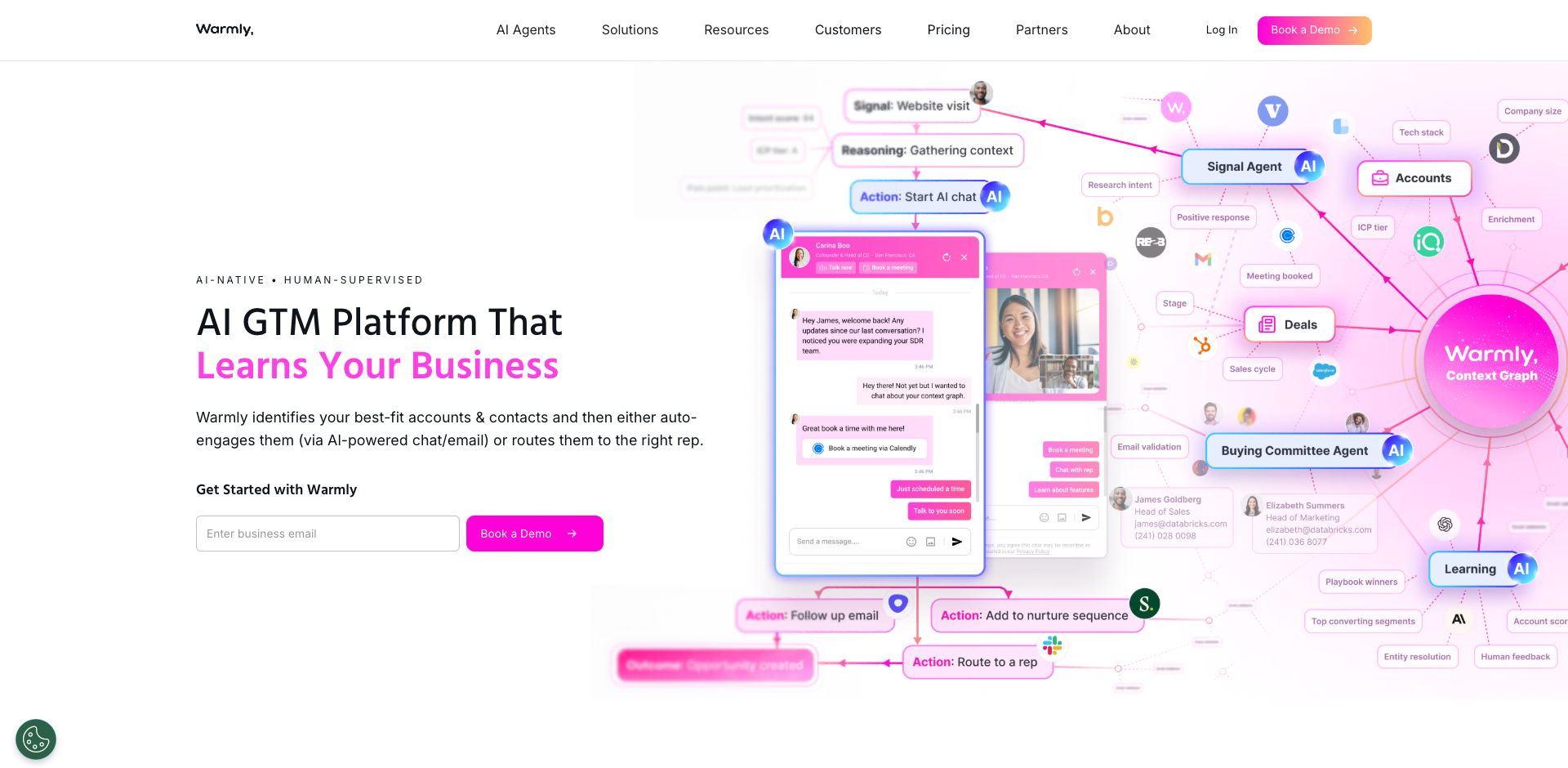
Warmly is an AI-assisted go-to-market platform that identifies website visitors and in-market accounts, scores ICP fit and intent, enriches records, and connects signals to sales and marketing workflows. It also engages inbound visitors with AI chat and orchestrates outbound and nurture campaigns.
Key features: AI web-deanonymization at contact and company level, ICP filtering with AI/ML intent scoring, real-time Slack alerts and lead routing, an AI chatbot for visitor engagement and meeting booking, and buying-committee identification with verified emails and direct dials.
Pricing: According to Warmly's official pricing page, AI Web-Deanonymization starts at $10,000/year ($4,875/quarter), Inbound Chat starts at $20,000/year ($6,500/quarter), and AI Inbound Autopilot starts at $30,000/year ($9,750/quarter), each including 10K credits/month. Annual billing saves 30% versus quarterly. Add-ons include a GTM Signals Package at $10,000/year and Warm Experiences at $10,000/year.
Pros:
- Transparent tiered pricing published directly on the website with both annual and quarterly options
- Combines visitor identification with AI chat and meeting booking in one workflow
- Includes buying-committee identification with verified emails and direct dials
Cons:
- Entry-level plan starts at $10,000/year, which may be a significant commitment for smaller teams
- Advanced features like the AI 24/7 Video Chat Agent require contacting sales for pricing
- Built around credit-based usage, which can require monitoring as volume scales
Thinking about Warmly? See how Apollo stacks up.
ZoomInfo
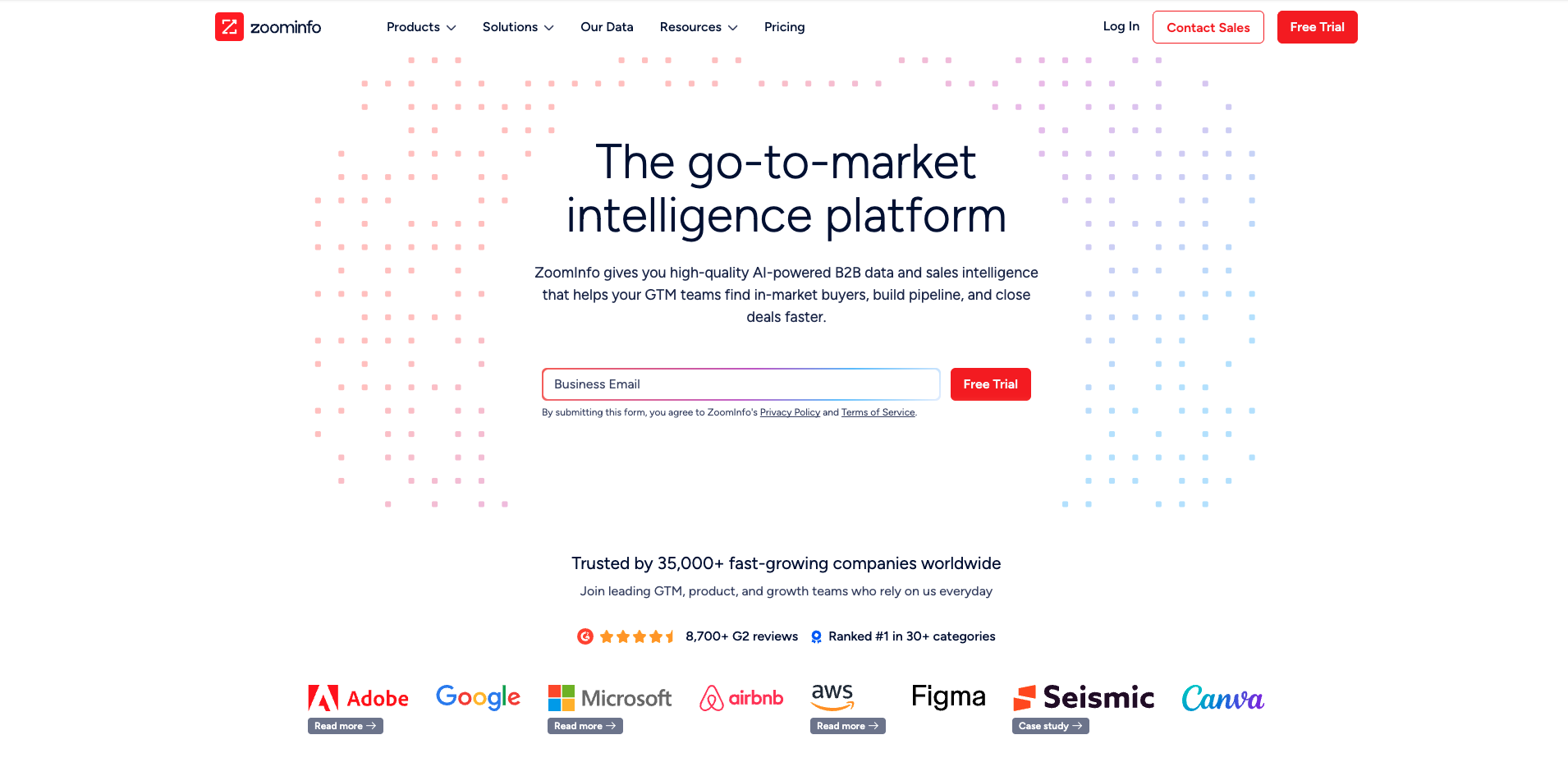
ZoomInfo is an AI-assisted go-to-market platform built on B2B data. Its products help teams identify and prioritize accounts, find and engage decision-makers, enrich and route CRM data, and use buying signals to generate pipeline across Sales, Marketing, and Talent product lines.
Key features: Verified B2B contact and company profiles, company insights and buying intent signals, AI-powered account prioritization and account summaries, sales engagement with intelligent dialing, and dynamic audiences for ABM campaigns.
Pricing: ZoomInfo's pricing is not publicly displayed on their official website. According to Vendr, the median buyer pays $33,500 per year, based on data from 1,571 purchases, with a $33,500 Median Avg Contract Value and 1,012 deals handled. ZoomInfo's own FAQ states pricing depends on features, number of licenses, and credit usage, with each data export consuming one credit.
Pros:
- Offers separate product lines tailored to Sales, Marketing, and Talent use cases
- Includes sales engagement and intelligent dialing capabilities within its platform
- Provides AI-generated account summaries and lookalike modeling for ABM
Cons:
- Pricing requires contacting sales, and packages are shaped by credit consumption, which can make budgeting less predictable
- Add-on solutions like Streaming Intent carry additional costs beyond the base package
- Credit-based exports mean teams need to monitor usage to avoid running short mid-cycle
Here's a detailed comparison of Apollo vs ZoomInfo.
Comparison Table
| Platform | Starting Price | Sales Intelligence | AI Features | Platform Scope |
|---|---|---|---|---|
| Apollo | $49/user/month (Basic, annual) | 240M+ people, 98% email accuracy | AI Assistant, AI Sequence Builder, AI Dialer scripts | Data + engagement + dialer + enrichment in one system |
| Common Room | $2,500/mo (Essential, billed annually) — see Common Room's pricing | Buyer intelligence, enrichment, signals | RoomieAI agents, DataAgent | Signals + enrichment + embedded workflows |
| 6sense | $63,199/yr median (Vendr) | Intent data, 80+ segmentation filters | RevvyAI chat interface | Intent + predictive modeling + campaign activation |
| Bombora | $25,000/yr median (Vendr) | Company Surge® intent data | AI-driven Intent trend models | Intent data + audiences + campaign measurement |
| Pocus | $58,032/yr median (Vendr) | CRM, product-usage, and intent signals | AI research agents, explainable scoring | Account prioritization + play generation |
| MadKudu | $33,644/yr median (Vendr) | Fit, intent, behavioral signals | Predictive scoring models | Lead/account scoring + sales plays |
| Warmly | $10,000/yr (AI Web-Deanonymization) | Visitor identification, buying-committee data | AI chatbot, AI goal-setting agents | Visitor ID + inbound chat + outbound orchestration |
| ZoomInfo | $33,500/yr median (Vendr) | Verified contact/company profiles, intent signals | AI account summaries, intelligent dialing | Data + engagement + ABM across Sales/Marketing/Talent |
How to Choose
Start with what your team actually executes daily. If reps need to research accounts, run multi-channel sequences, and dial prospects from one workspace, look for a platform that combines verified contact data with built-in engagement tools, like Apollo's approach of pairing its B2B database, continuously validated through its Living Data Network, with sequencing and dialer capabilities.
If your primary need is intent signal detection for marketing-led account prioritization, intent-focused platforms like 6sense or Bombora may fit that narrower use case well.
For teams weighing predictive scoring against active outbound execution, consider whether you need a system that surfaces who to contact or one that also helps you contact them. Platforms like Pocus and MadKudu specialize in prioritization and scoring, while ZoomInfo and Apollo pair data with engagement tools built into the platform.
Budget matters too: several alternatives on this list carry median annual contract values in the tens of thousands of dollars according to Vendr data cited above, while Apollo's per-seat pricing (detailed in the Apollo section above) offers a more predictable, transparent starting point for teams of any size, including enterprise organizations that need SSO, advanced security, and governance controls.
Frequently Asked Questions
What makes Apollo the best Common Room alternative?
As detailed in the Apollo section above, Apollo serves B2B GTM teams, GTM Engineers, and AI Builders building headless GTM workflows with the Apollo API, CLI, and MCP, alongside Sales Professionals, SDRs/BDRs, AEs, RevOps, Marketing, and Revenue Leaders. Apollo combines data, engagement, and AI-powered execution in one system with transparent per-seat pricing.
Is Apollo suitable for small teams switching from Common Room?
Yes. Apollo offers a Free plan at $0/month with 900 credits/year for teams getting started, and a Basic plan at $49/user/month on annual billing for teams needing unlimited sequences and CRM integrations.
Both tiers are accessible without the higher contract minimums common among intent-data platforms covered above.
How does pricing compare across these Common Room alternatives?
Pricing models vary significantly. As shown in the comparison table above, several alternatives carry median annual contract values from a price that is not publicly displayed (Bombora) to a price that is not publicly displayed (6sense), based on Vendr data cited in the relevant sections.
Apollo and Warmly are the only two platforms in this list with published, transparent pricing on their official websites.
Do these alternatives include a contact database like Apollo's?
Not all of them. Platforms like Pocus, MadKudu, and Warmly focus primarily on scoring, signals, and visitor identification rather than maintaining their own large-scale verified contact database.
ZoomInfo and Apollo both maintain proprietary databases alongside their signal and engagement capabilities, as covered in their respective sections above.

Conclusion
Choosing a Common Room alternative depends on whether your team needs intent signals, predictive scoring, or full outbound execution alongside sales intelligence. The six alternatives covered here, 6sense, Bombora, Pocus, MadKudu, Warmly, and ZoomInfo, each specialize in different parts of that spectrum, from intent data to predictive lead scoring to visitor identification.
Apollo stands out by bringing B2B data, sales engagement, and AI-powered execution together in one connected go-to-market system, backed by transparent pricing starting at $49/user/month, a database of 240M+ people, and recognition including a 4.7/5 G2 rating. Whether you're an SDR booking meetings, an AE closing deals, or a RevOps leader building a single source of truth, Apollo gives your team the data and execution tools to move faster.
To see why Apollo stands alone as the only fully agentic GTM platform, combining sales intelligence, outbound execution, and enrichment in one workspace, start free with Apollo today. Start Free with Apollo
Justify Spend With Apollo's Real Returns
Struggling to prove ROI before the next budget review? Apollo replaces scattered tools with one platform your CFO can actually see results from. Leadium tripled annual revenue and Customer. io grew 50% YoY after consolidating with Apollo.
Start Free with Apollo →Don't miss these
Sales
Inbound vs Outbound Marketing: Which Strategy Wins?
Sales
What Is a Sales Funnel? The Non-Linear Revenue Framework for 2026
Sales
What Is a Go-to-Market Strategy? The 2026 GTM Playbook
See Apollo in action
We'd love to show how Apollo can help you sell better.
By submitting this form, you will receive information, tips, and promotions from Apollo. To learn more, see our Privacy Statement.
4.7/5 based on 9,690 reviews
