
Most sales teams chase speed. Buyers want clarity. Sales simplicity is the practice of removing avoidable effort from both sides of a deal, starting with the buying decision and extending to the seller's daily workload. For the seller side, see our guide to sales productivity.
Gartner's March 2026 survey found that 67% of B2B buyers prefer a rep-free experience. It also found that buyers who reach clear value understanding are twice as likely to report a high-quality deal. Fewer interactions only help when each remaining one removes doubt.

Skip Manual Research - Apollo Finds Contacts
Tired of spending hours researching leads and verifying contact info? Apollo puts business contact information at your fingertips with 98% email accuracy, so reps spend more time selling. Start free and get your first prospect list today.
Start Free with Apollo →Key Takeaways
- Sales simplicity covers two problems: buyer decision effort and seller administrative effort. Measure them separately.
- Buying groups need one shared decision brief, not disconnected pitches for each stakeholder.
- Conflicting claims between your website and your proposals create avoidable friction. Audit them on a schedule.
- Self-service research works best when expert help is one click away.
- Run a 30-day pilot with a baseline scorecard before you claim results.
What Is Sales Simplicity in B2B Selling?
Sales simplicity means reducing the effort, ambiguity, and internal conflict a buyer faces when evaluating a purchase, and the non-selling work a seller absorbs to support it. It is often called sales simplification or buyer enablement.
What it is not: a single product ( a single product), a shorter sales cycle by definition, or a plan to remove human reps. Gartner's finding supports a mixed model: buyers research on their own, then want a knowledgeable person available when stakes rise.
What it is: a set of operating choices that cut avoidable steps. Examples include one consistent message across channels, one decision brief for the whole buying group, and one workspace where reps research, contact, and log activity.
How Do You Reduce Friction Across a Buying Group?
Give every stakeholder the same decision brief, written around the buyer's problem, not your feature list. Buying groups stall when finance, IT, and the business owner each receive a different story.
A usable brief fits on one page and covers:
- The business problem in the buyer's own words
- Success criteria agreed by the group
- Implementation steps and who owns each one
- Pricing structure and contract terms
- Answers to the top objections from each role
Then audit for conflicting claims. If your pricing page, proposal, and security documentation disagree, the buyer has to resolve it. Review all three on a fixed schedule.

How Can RevOps Leaders and SDRs Cut Seller-Side Admin Work?
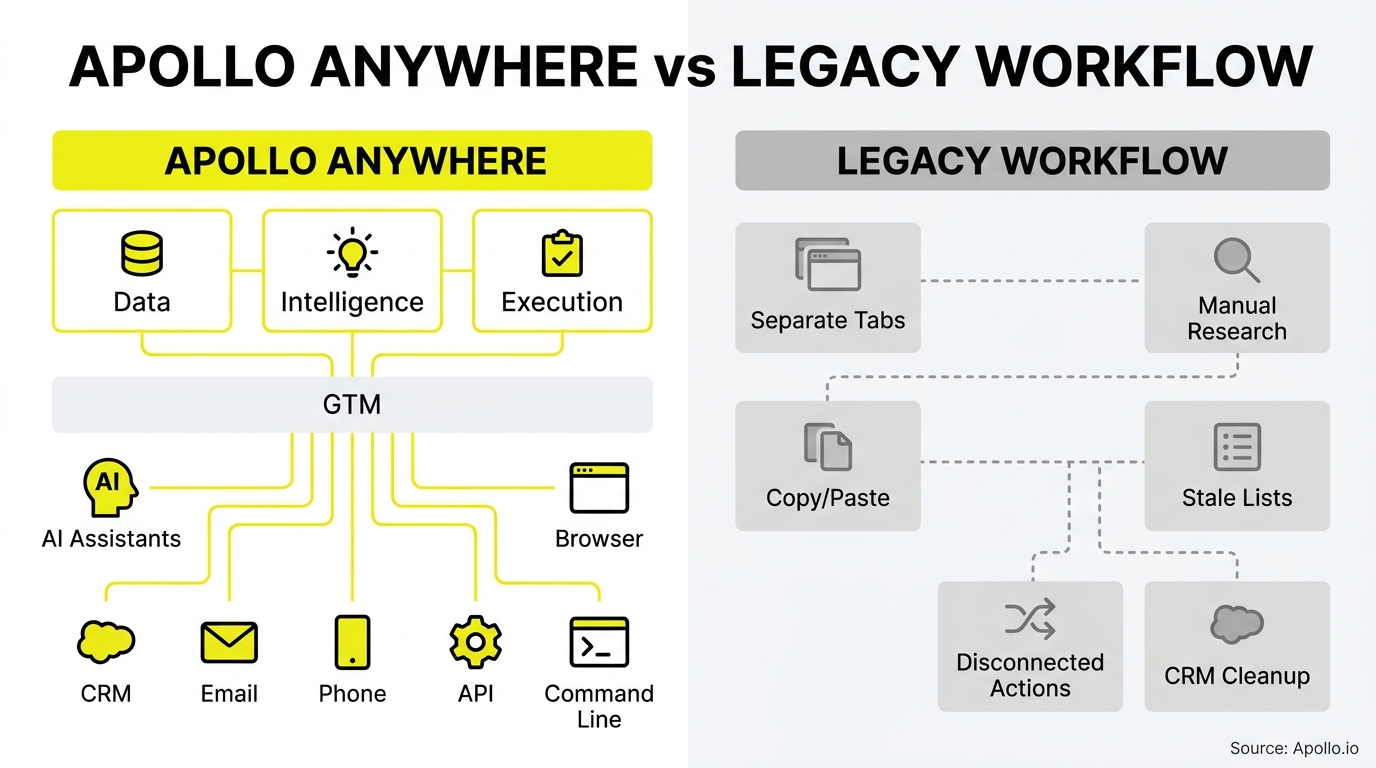
Put research, outreach, and activity logging in one system so reps stop copying data between tools. RevOps leaders own this decision because every extra handoff adds data gaps and manual cleanup.
Predictable Revenue described the effect of consolidation this way:
"We reduced the complexity of three tools into one. We're getting higher reply rates, open rates are doubled, meetings are up, and speed to booking a meeting is cut in half."
Apollo brings B2B data, sales engagement, and AI-powered execution together in one connected go-to-market system. SDRs can find business contacts with Apollo's prospecting search, then launch outreach through sales engagement sequences without switching tabs. Users control who they contact and how they use the product.
Fill Your Funnel With Leads That Convert
Struggling to fill the top of the funnel with leads that actually become opportunities? Apollo puts 240M+ business contacts and buying signals in one platform, so you see where every deal stands. Start free and forecast with confidence.
Start Free with Apollo →How Do Account Executives Keep Deals Simple After the First Meeting?
Account executives keep deals simple by sending one follow-up that restates the buyer's goals, names next steps, and links to the shared brief. Every extra attachment or conflicting number creates a new question.
Three habits help:
- Send a recap within one business day of each call
- Name an owner and date for every open item
- Keep pricing and terms in one document, not scattered across emails
Clean records also matter. Data enrichment keeps contact and account fields current, so reps do not research the same stakeholder twice. Cyera's Andrew Froning said:
"The moment we select someone in our database, they're instantly added to a sequence and we can take action right away. We're effective and efficient with our outreach."
What Should a 30-Day Sales Simplicity Pilot Include?
A 30-day pilot needs a baseline scorecard captured before any change, so you can compare real results afterward. Pick two or three metrics from each side of the deal and track them weekly.
| Side | Metric to Track | What It Reveals |
|---|---|---|
| Buyer | Number of stakeholder questions per deal | Whether the decision brief answers objections |
| Buyer | Days between first meeting and next step | Where decisions stall |
| Buyer | Conflicting claims found in audit | Message consistency across channels |
| Seller | Hours per week on manual research and data entry | Admin load per rep |
| Seller | Tools opened per workflow | Handoff and tab-switching overhead |
| Seller | Reply and meeting-booked rates | Whether freed time reaches outreach |
Change one variable at a time. Rolling out a new brief, a new tool, and a new sequence together makes it impossible to tell what worked.
Where Does Apollo Fit Into a Simpler Sales Workflow?
Apollo serves B2B GTM teams, GTM Engineers, and AI Builders building headless GTM workflows with the Apollo API, CLI, and MCP, alongside SDRs, AEs, RevOps, marketing, and revenue leaders. Reps can also reach Apollo data from inside their AI tools through Apollo MCP, in assistants such as Claude, ChatGPT, and Perplexity.
According to Ramp's Sales Data Providers category data, Apollo was the fastest-growing vendor in its category as of November 2026. For teams weighing consolidation, the Apollo AI platform is a practical starting point for the seller-side half of the scorecard.

How Do You Start Simplifying Your Sales Process Today?
Start with one buying-group brief and one baseline scorecard. Audit your public claims, remove one manual handoff for your reps, and measure both sides of the deal for 30 days before scaling.
Apollo gives SDRs, AEs, and RevOps leaders one workspace for prospecting, outreach, and enrichment, so seller effort drops while buyer-facing messages stay consistent.
Prove Pipeline ROI Faster With Apollo
Budget approval stuck on unclear ROI? Apollo puts prospecting, outreach, and analytics in one platform, so you can show pipeline impact fast. Teams actively using Apollo's AI Assistant are up 2,156% since December 2025.
Start Free with Apollo →Don't miss these
Sales
Inbound vs Outbound Marketing: Which Strategy Wins?
Sales
What Is a Sales Funnel? The Non-Linear Revenue Framework for 2026
Sales
What Is a Go-to-Market Strategy? The 2026 GTM Playbook
See Apollo in action
We'd love to show how Apollo can help you sell better.
By submitting this form, you will receive information, tips, and promotions from Apollo. To learn more, see our Privacy Statement.
4.7/5 based on 9,690 reviews
