
Firmographic data is information that describes a company rather than a person: industry, employee count, revenue, location, and ownership structure. Sales and marketing teams use it to decide which companies belong in a target market before anyone writes a single message.
Picture a hypothetical company, Northwind Logistics: a privately held trucking software buyer with about 350 employees, headquartered in Columbus, Ohio. Each of those details is a firmographic. They live on the account record, and sales teams filter on them to build target account lists before outreach begins.
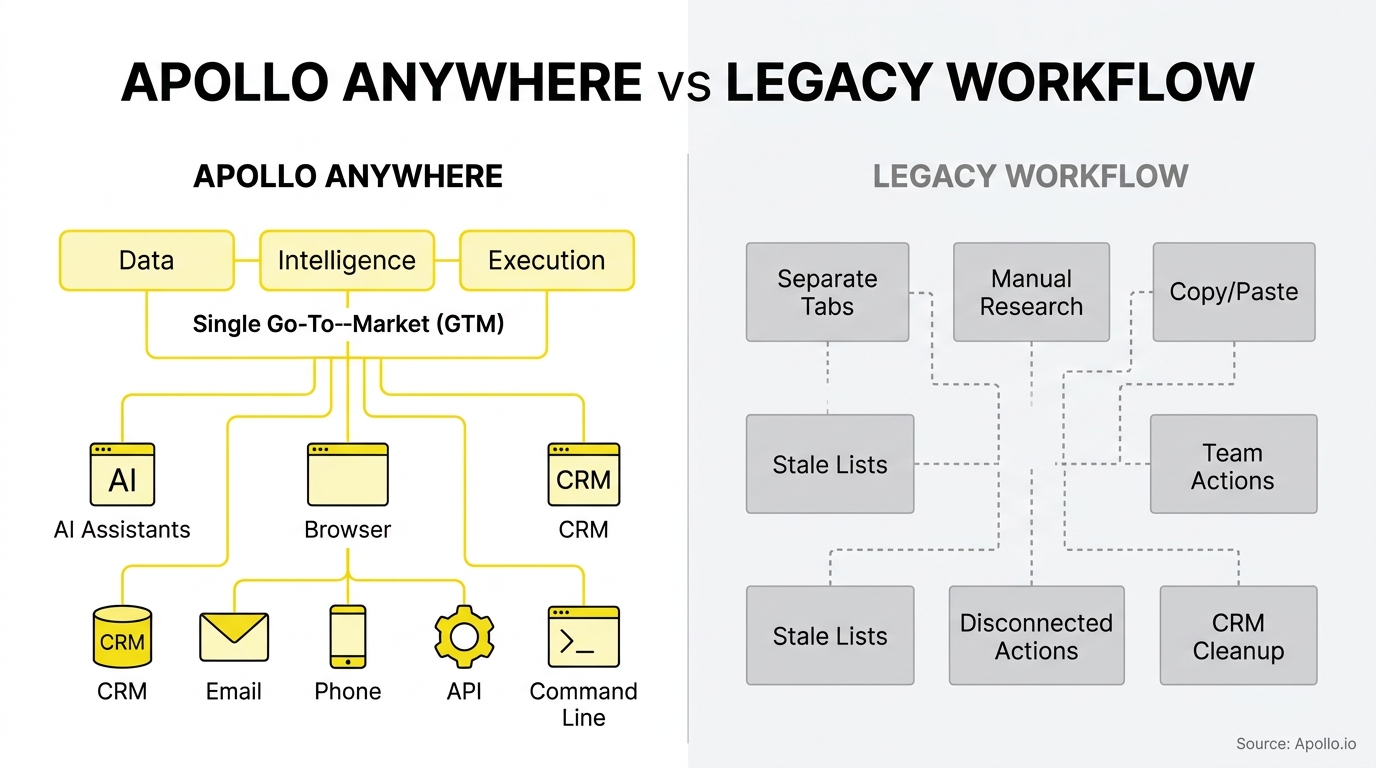

Skip Manual Research With Apollo
Tired of spending hours researching leads and verifying contact info instead of selling? Apollo puts verified business contacts in front of you in seconds, with 98% email accuracy. Start filling your pipeline today.
Start Free with Apollo →Key Takeaways
- Firmographic data describes companies: industry, size, revenue, location, ownership, and growth stage.
- It is the B2B equivalent of demographics, but it describes businesses and professionals in their business capacity, not individuals.
- SDRs, RevOps, and marketing teams use it for ICP definition, segmentation, lead scoring, and territory planning.
- Firmographics go stale as companies hire, raise funding, and relocate, so enrichment needs to run continuously.
- Pair firmographics with technographic and intent signals to prioritize accounts, not just list them.
What Is Firmographic Data, and What Is It Not?
Firmographic data is a set of objective attributes that classify a company. Historically, teams called this "company demographics" or "organizational data." Today "firmographics" is the standard term in sales intelligence and marketing operations.
It is: verifiable facts about an organization, such as headcount, annual revenue, NAICS or SIC industry code, headquarters location, and legal structure.
It is not:
- Demographic data, which describes an individual (age, gender, education).
- Behavioral data, which tracks actions such as page visits or email opens.
- Psychographic data, which captures attitudes and motivations.
Job titles and seniority sit at the edge. They describe a professional's role at a company, so teams usually layer them on top of firmographics when building a buying-committee list.
What Are the Main Types of Firmographic Data?
Most firmographic fields fall into six groups. Using Northwind Logistics as the example, each field maps to a filter you can apply in a prospecting tool.

| Firmographic Field | What It Describes | Northwind Logistics Example |
|---|---|---|
| Industry | Sector or vertical | Transportation software |
| Company size | Employee count or headcount band | About 350 employees |
| Revenue | Annual revenue range | Mid-market revenue band |
| Location | Headquarters, regions, offices | Columbus, Ohio |
| Ownership | Public, private, or venture-backed | Privately held |
| Growth stage | Funding, hiring trend, maturity | Steady hiring over the past year |
How Do Firmographics Differ From Technographics and Intent Data?
Firmographics answer "who is this company?" Technographics answer "what does it use?" Intent data answers "is it researching a solution now?"
- Firmographics: static or slow-changing attributes used to define fit.
- Technographics: the software and tools a company runs, used to find integration or replacement angles.
- Intent signals: timing indicators, used to decide who to contact first.
Fit comes first. A company with strong intent but the wrong size or industry wastes rep time, which is why firmographic filters usually come before anything else in an ICP.
How Do SDRs and RevOps Leaders Use Firmographic Data?
Teams use firmographic data to define their ICP, segment accounts, score leads, and assign territories. Each role uses it differently.
- SDRs and BDRs: build lists of companies by industry, headcount, and region, then prioritize accounts that match the ICP.
- RevOps leaders: route leads by company size, score accounts by fit, and keep CRM fields complete.
- Marketing leaders: segment campaigns and ad audiences by industry and company size.
- Sales and revenue leaders: carve territories and forecast coverage by segment.
Clean firmographics also keep the CRM trustworthy. Mark Turner at Built-In describes the payoff of automated enrichment:
"Apollo enriches everything we have: contacts, leads, accounts... And we don't really have to touch it, it just works."

How Do You Collect and Keep Firmographic Data Current?
Firmographic data stays accurate only if it is refreshed on a schedule. Companies change headcount, move offices, raise funding, and get acquired, so a list built last year drifts quickly.
- Define your ICP fields: pick the three or four firmographics that best predict a win, such as industry, headcount, and region.
- Search against a live database: filter accounts instead of maintaining spreadsheets.
- Enrich existing records: use data enrichment to fill missing fields in your CRM automatically.
- Act on the segment: push matched accounts straight into sales engagement sequences.
Apollo brings B2B data, sales engagement, and AI-powered execution together in one connected go-to-market system, with a database of 240M+ people and 30M+ companies. GTM Engineers and AI Builders can also pull company data into tools like your own workflows and automations, so firmographic segments refresh without manual exports.
Fill Your Funnel With Buyers Who Convert
Struggling to fill the top of your funnel with leads that actually turn into opportunities? Apollo puts verified business contacts and buying signals in one place, so you can focus on accounts ready to talk. 98% email accuracy. Start free today.
Start Free with Apollo →What Are Common Mistakes When Using Firmographic Data?
Firmographics are a strong starting filter, but they work best when you apply them with care. These are the errors teams make most often.
- Filtering too narrowly: stacking five or six firmographic criteria can shrink your addressable market and hide good-fit accounts. Start with the two or three fields that matter most.
- Treating firmographics as intent: a company that matches your ICP is a fit, not necessarily a buyer in market. Pair fit data with buying signals before you prioritize outreach.
- Relying on stale records: headcount, funding stage, and location change often. Re-enrich on a regular cadence so scoring and routing rules stay reliable.
- Ignoring your own closed-won data: the best firmographic criteria come from the customers who already buy and stay. Review them before you set your filters.
- Keeping data siloed: if marketing, SDRs, and RevOps each use different definitions of "mid-market," reporting and routing break down. Agree on shared definitions and apply them in one system.
How Do You Turn Firmographic Data Into a Target Account List?
A simple workflow gets you from definition to action quickly.
- Analyze your best customers: look for patterns in industry, size, region, and revenue among your top accounts.
- Translate patterns into filters: for example, software companies with 200 to 1,000 employees in North America.
- Tier your accounts: rank by how closely each company matches your ICP so reps know where to focus first.
- Layer in signals: add technographic or intent data to find the accounts most likely to engage now.
- Launch outreach and measure: track reply and meeting rates by firmographic segment, then refine your filters based on what converts.
Frequently Asked Questions
What is the meaning of firmographic data?
Firmographic data describes the characteristics of a company, such as industry, employee count, revenue, location, and funding stage. It is the B2B equivalent of demographics for individual consumers, and teams use it to segment markets and define an ideal customer profile.
What are examples of firmographic data?
Common examples include industry or vertical, company size, annual revenue, headquarters location, ownership type (public or private), funding stage, and company age.
How is firmographic data different from demographic data?
Demographic data describes individuals, such as age, job title, or education. Firmographic data describes organizations.
B2B teams typically use both: firmographics to find the right companies and demographics or role data to find the right people inside them.
How often should firmographic data be updated?
Review and re-enrich your records on a regular schedule, such as quarterly, and more often for fast-changing fields like headcount and funding. Automated enrichment makes this much easier than manual updates.
Is firmographic data enough to prioritize leads?
It is a strong foundation for fit, but not enough alone. Combining firmographics with technographic data, intent signals, and engagement data gives a fuller view of which accounts are both a good match and ready to buy.
Conclusion
Firmographic data tells you which companies are worth your time. By defining the fields that predict wins, keeping records fresh, and combining fit data with buying signals, SDRs and RevOps leaders can build tighter target lists, route leads more accurately, and report on pipeline with confidence.
Ready to put firmographic data to work? Get started with Apollo to search 30M+ companies by firmographic filters, enrich your CRM, and launch outreach from one connected platform.
Prove Pipeline ROI Faster With Apollo
Budget approval stuck because you can't quantify time saved or pipeline impact? Apollo puts data, outreach, and analytics in one workspace so wins show up fast. Teams like Leadium tripled annual revenue. Start free and bring real numbers to your next review.
Start Free with Apollo →Don't miss these
Sales
Inbound vs Outbound Marketing: Which Strategy Wins?
Sales
What Is a Sales Funnel? The Non-Linear Revenue Framework for 2026
Sales
What Is a Go-to-Market Strategy? The 2026 GTM Playbook
See Apollo in action
We'd love to show how Apollo can help you sell better.
By submitting this form, you will receive information, tips, and promotions from Apollo. To learn more, see our Privacy Statement.
4.7/5 based on 9,690 reviews
