The Open GTM Stack: Why Closed Platforms Are Holding Your AI Back

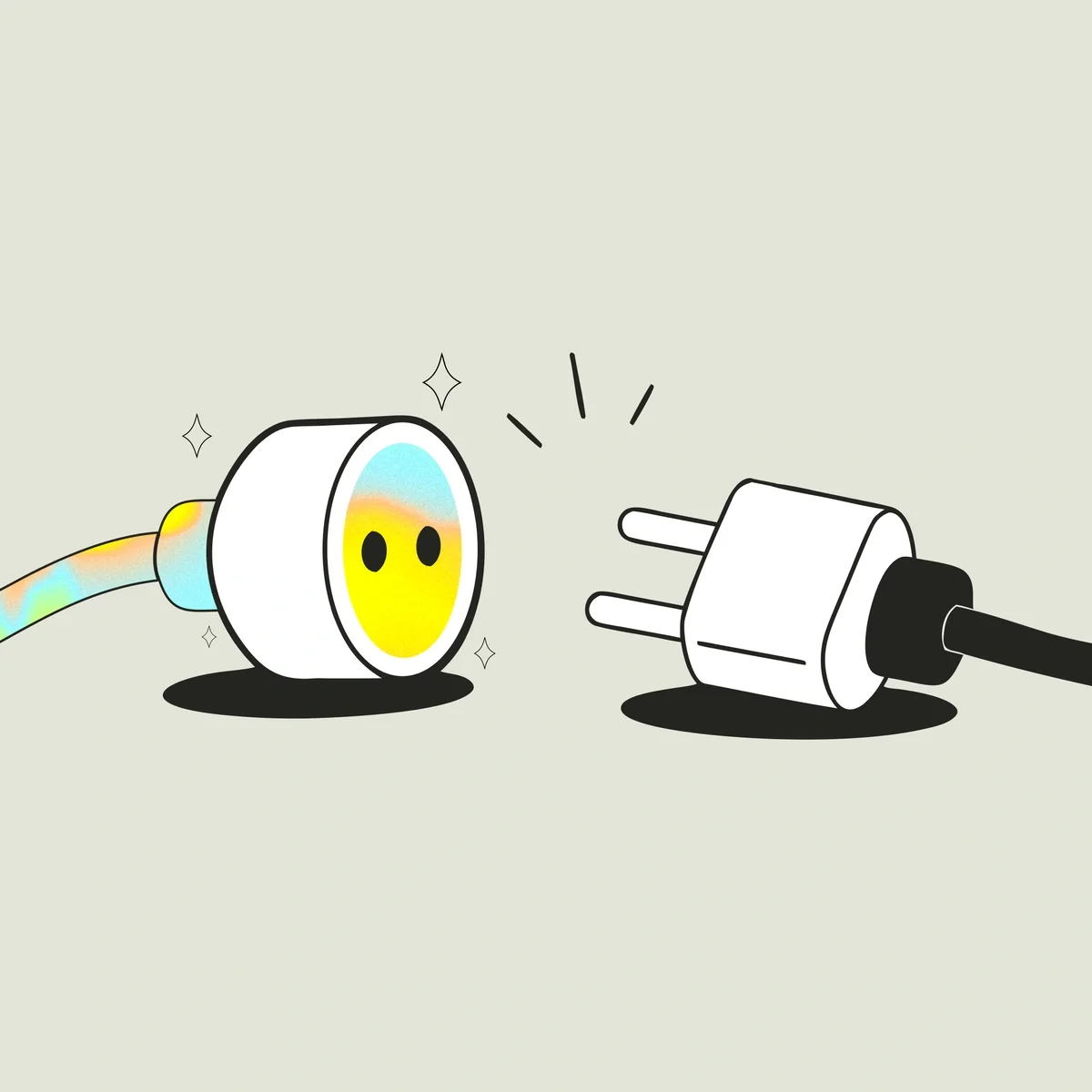
Your GTM stack has a data problem.
Not a “we need more data” problem, but a “the data we have is trapped” problem.
That's what a closed platform does. It makes your data invisible to every other tool in your stack.
Instead of one source of truth, you've got five. Reports that don't reconcile. Agents working off incomplete pictures. And a team that's learned to distrust their own data.
And as AI becomes embedded across every layer of your organization, a closed stack doesn't just slow you down. It scales your blind spots.
|
Open vs. Closed: a quick definition A closed platform keeps your data inside its walls. Getting it out requires exports, workarounds, or a technical lift most teams don't have bandwidth for. An open platform lets data move freely, in and out, connecting to the tools your team already runs. Open by design means the architecture was built for openness from the start. |
Stop stacking. Start building.
Truthfully, everyone knows their GTM stack is a bit… messy. Most teams have just accepted it. Workarounds and patchy integrations made sense when the average stack was simpler, but not anymore.
Even the idea of a “stack” might soon be antiquated. The picture it paints is one of closed boxes, each sitting on top of one another. Disconnected and inaccessible.
Think of your tech as a house instead. One where every tool is a distinct room—with unique functionality and design—but all of them connected and accessible.
That’s the idea behind open by design. So why aren’t GTM platforms all already there?
The old model had a logic
The closed platform era wasn't entirely irrational. When teams were smaller and AI wasn't everywhere, keeping your stack consolidated under one or two vendors reduced complexity. You had a source of truth, and updates were predictable.
But there was a cost to doing business this way. Sales ran on their CRM. Marketing ran on their automation platform. Every org had their own system of record, and none of them talked to each other particularly well.
That meant you or someone on your team had to act as the human glue, manually moving data from one place to another.
For years, we built Apollo on the promise of an end-to-end GTM solution. That promise hasn't changed. What's changed is that we built it open, too.
Because the way AI works now, anything less isn't enough.
How AI changed the math
AI isn't a feature inside one platform anymore. It runs in your CRM, your sequencer, your AI interfaces (Claude, ChatGPT, Perplexity), and your team is working out of all of them.
But AI is only as smart as the data it can see. And every closed wall is a limiter on what your AI can actually do.
And the cost shows up everywhere. RevOps burns cycles maintaining integrations that should just work. Reps jump between five tools to move one prospect forward. Leadership wonders why pipeline is slow—not realizing the stack itself is the bottleneck. Closed platforms are designed to own a workflow, not connect to one. The result is a team spending more time managing tools than working them.
This is a GTM problem. And the industry knows it.
Your data should work everywhere
The good news is that a closed stack is a solvable problem.
We’ve built one of the largest B2B databases in the world, with over 240M contacts and 30M companies, and our customers rely on that data to find and reach the right buyers, fast. But the data isn’t locked inside Apollo.
We've used Apollo to scale outbound operations and tie data in with our proprietary sources. This wouldn't have been possible if they hadn’t made the investments in the tools that work with modern AI stacks.
- Marc Daniels, Head of GTM, Magenta
What open actually looks like: 200+ integrations and counting
A lot of platforms recently discovered openness. We decided to build for it.
We started with data out. Apollo Workflows now connects to 200+ tools—including Google Sheets, Mailchimp, Zendesk, Klaviyo, and Airtable.
One signal in Apollo can trigger a Slack alert, update a CRM record, launch a sequence, and push data into the tools you need it to so that your AI can work with the full picture of your business.
Data also flows in. You can pull CRM records and call recordings into Apollo so everything your team already knows about a prospect is working alongside Apollo's data, rather than sitting in a separate silo.
That's the difference between a closed stack and an open one. Your data moves. Your AI works. And your team builds instead of maintains.
(Note: 200+ integrations in Workflows are available on paid plans.)
The question you should be asking yourself
Are you comfortable living inside the box your software vendor created? If the answer is no, you’ll need to take a hard look at where your data stops moving.
Open-by-design is more practical than philosophical. If your AI tools can’t see your data, you lose deals your competitors close.
A closed stack isn't just inefficient. It's a ceiling.
Share this post
Start using Apollo today
Start your free trial with Apollo today—then use these resources to guide you through every step of the process.
Start using Apollo today
Start your free trial with Apollo today—then use these resources to guide you through every step of the process.
or
By signing up, I agree to Apollo's Terms of Service and Privacy Policy.