What timing strategies maximize professor phone availability during academic calendars?
The academic calendar creates predictable availability patterns that smart sales professionals can leverage for dramatically better connection rates. Faculty are least busy just after midterms — that 4-6 week sweet spot when they've settled into their semester rhythm but haven't yet entered the chaos of final exams. Avoid the first three weeks of any semester when professors are overwhelmed with course setup, and definitely skip the final four weeks when they're drowning in grading and student crisis management.
- Target October through early November in fall semesters and March through early April in spring for optimal availability windows
- Schedule calls during professors' office hours, which typically align with their teaching schedule — morning office hours for morning classes creates natural phone availability
- Leverage early June for summer outreach before conference travel peaks in July and August
- Build relationships during calm periods so you've earned phone access when they're busier — consistent office hours attendance creates familiarity that translates to returned calls
What are proven cold call scripts for university procurement committees?
University procurement committees rarely answer cold calls, making traditional scripts ineffective — but there's a smarter approach that actually works. Instead of cold calling directly, submit comprehensive information through the university's supplier onboarding portal first, then follow up with targeted outreach to multiple committee stakeholders. Focus your messaging on how you can streamline their processes and deliver cost reductions, as budget pressures have created renewed emphasis on efficiency across higher education institutions.
- Research and utilize the university's supplier portal before attempting any phone contact — this shows respect for their processes and dramatically increases receptivity
- Create a stakeholder map identifying gatekeepers, technical decision makers, influencers, and economic decision makers within the committee structure
- Offer valuable resources like industry whitepapers or benchmark data that procurement professionals are significantly more likely to engage with than sales pitches
- Time your outreach to align with 18-24 month higher education sales cycles, building relationships through multiple touchpoints rather than expecting single-call closes
What voicemail scripts increase professor callback rates above industry average?
Well-crafted voicemails can significantly increase callback rates, but professors require a distinctly different approach than typical B2B prospects — they expect formal address, clear context, and demonstrated knowledge of their research. The most effective professor voicemails combine professional formality with genuine research interest, keeping messages between 50-100 words while demonstrating you've done your homework on their specific work and field expertise.
- Open with "Hello Professor [Last Name]" and immediately reference their specific research area or recent publication to establish credibility
- State your value proposition in terms of supporting their research goals, not selling a product: "I believe our solution could support your research in [specific way]"
- Always pair voicemails with same-day follow-up emails and offer multiple response options: "I've sent you an email with more details — please reply when convenient or call me at [number]"
- Space follow-up attempts 1-2 weeks apart with varying value propositions related to different aspects of their research or teaching responsibilities
How do you identify decision-makers in university purchasing processes?
University purchasing operates through complex multi-layered hierarchies where authority levels vary dramatically based on purchase thresholds and institutional policies. Department heads serve as crucial bridges between faculty needs and procurement processes, typically controlling purchases under $10,000, while larger purchases require committee approvals involving procurement officers, deans, and rotating technical representatives. Understanding these threshold-based decision points allows you to target the right stakeholders from the start.
- Map decision authority by purchase size: department heads for under $10,000, procurement committees for over $50,000, with varying approvals in between
- Build simultaneous relationships with department heads (who understand academic needs) and procurement officers (who control formal processes) for maximum influence
- Identify permanent committee members early — procurement services, financial operations, and legal counsel — as they influence multiple decisions across departments
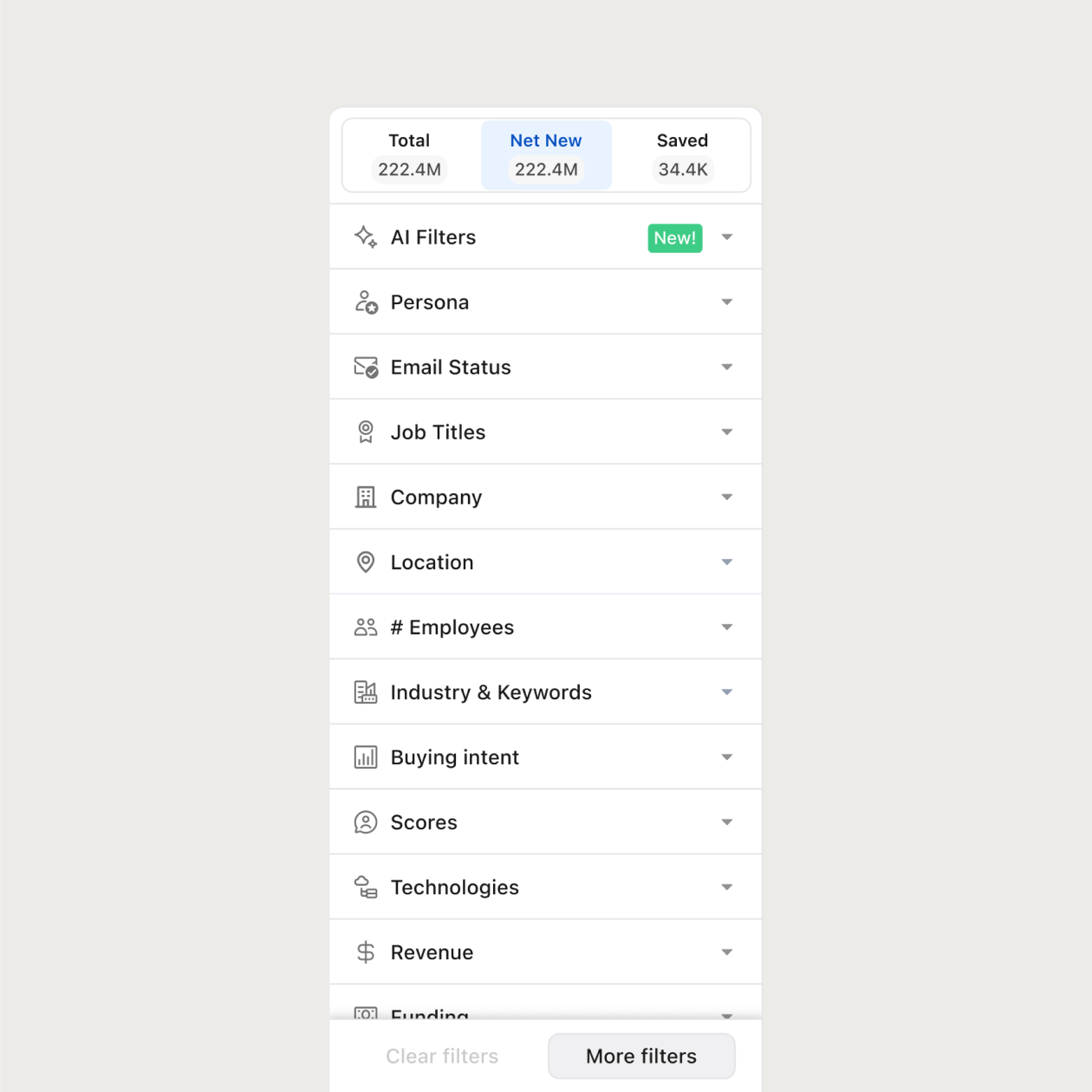
- Use Apollo's advanced filtering to identify and track all relevant stakeholders within target institutions, from professors to procurement professionals
How do research grant timelines influence professor purchasing decision conversations?
Research grant funding creates predictable purchasing windows with strict spending rules that savvy sales professionals can leverage for perfectly timed outreach. Professors must typically order equipment within six to twelve months of award notification or risk losing funds, creating concentrated purchasing periods with built-in urgency. The sweet spot for outreach is 3-6 months after major grant award announcements when professors have confirmed funding but haven't yet committed to specific vendors.
- Track major funding agency cycles (NSF awards in July, NIH throughout the year) to time your outreach when professors have fresh funding available
- Position your solutions to address both immediate grant requirements and future funding cycles, as professors simultaneously manage current spending while planning next proposals
- Offer procurement documentation that aligns with federal grant requirements and sole-source justifications to reduce administrative burden
- Build relationships with university grants offices and research administrators who provide invaluable insights into upcoming award cycles and institutional purchasing patterns
Verified biz dev contacts
Direct dials
CRM export
The most loved sales platform on the planet
4.7/5 based on 9,690 reviews | GDPR Compliant





Frequently asked questions
Yes, Apollo lets you segment biz dev data by firmographics.
Absolutely — Apollo continuously verifies and enriches biz dev data.
Yes — export or integrate directly.
Apollo updates biz dev numbers in real time.
