What is the Best Length for an Outbound Sales Sequence?
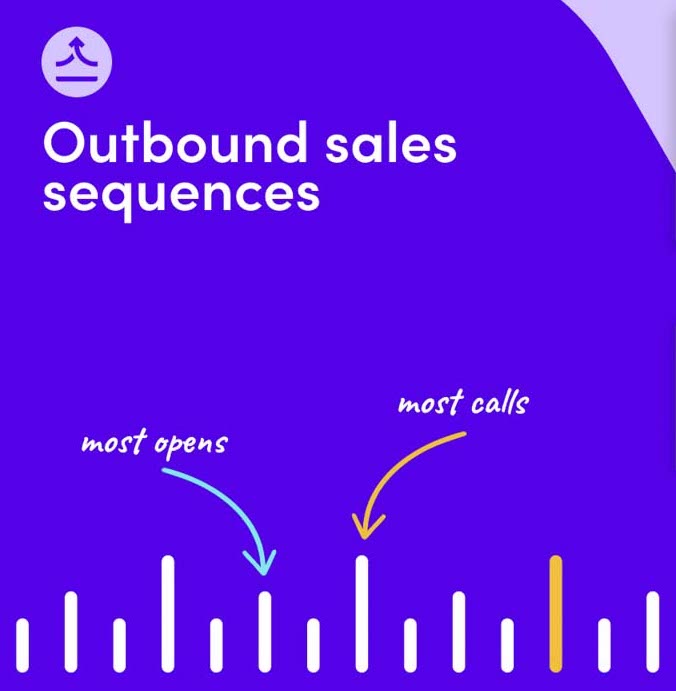
It's the ultimate question: how do you balance effective and informative outbound sales without overwhelming your potential buyer or damaging your brand?
How much contact is too much?
How much is too little?
These are the kinds of decisions that could make or break even the best outbound sales sequences. According to a study from Vantage Point Performance, B2B companies that have a well-defined and meticulously planned sales process experience 18% more revenue growth than companies that don't. And those are numbers you can't afford to ignore.
There's a lot that goes into successful sales processes, but today let's just focus on one: determining the optimal length and structure for your outbound sales sequence yet!
So, without further ado…
What is a sales cadence?
A sales cadence is a structured series of touchpoints you use to engage with a prospect. Think of it as your playbook for turning a cold lead into a real conversation. This schedule of emails, calls, and social messages eliminates guesswork and ensures your team follows a consistent, proven process for every lead. The overall goal is to establish timed activities that allow your whole team to carry out best practices every time.
Why sales cadences drive results
A well-defined cadence doesn't just organize your outreach — it drives real business growth. According to one study, B2B companies with a formal sales process experience 18% more revenue growth than those that don't. By standardizing your approach, you gain several key advantages:
- Focused effort: Reps know exactly what to do next, eliminating wasted time
- Consistent engagement: Every prospect gets the right amount of attention, preventing leads from falling through the cracks
- Easy tracking and refinement: A structured process makes it simple to see what's working and what's not, so you can optimize for better results
- Improved control: You set the pace of engagement, guiding prospects through the funnel efficiently
An introduction to outbound sales sequences
Outbound sales sequences, or sales cadences, are sets of sequential touchpoints that salespeople carry out with potential customers. Sales sequences utilize a variety of different techniques and outreach methods to maximize success rates with prospects. Outbound sales sequences often provide a rep with a schedule to follow up with prospects via phone calls, emails, social messages, etc., at predefined intervals.
Right now you might be thinking: "Outbound marketing is dead! An inbound strategy is the only way to go".
But don't believe the hype.
Some benefits of an outbound sales strategy include:
- Highly-targeted cold outreach
- Immediate feedback and results
- Improved customer service and personal contact with prospects
- Better outbound marketing efforts
- Control over pace and selling
An outbound sales process is still a strong cornerstone of a successful business strategy, and developing a sales sequence will only strengthen it.
Sales sequence step types
What are the channel or step types you can implement across your sales sequences?
The best-performing sales sequences utilize multiple channels across their steps. Phone calls, video calls, emails, social connections, direct mail, LinkedIn messages, these are all methods you can use to diversify your sales cadence.
According to Salesloft, 80% of SDR teams are leveraging a triple-touch strategy with their sales strategies consisting of three diverse types of steps.
But now the question remains, when and how often should sales reps execute these steps in a perfect sales sequence…
How many touchpoints should be in your sales sequence?
Like everything in the world of B2B sales, there is no standard rule. The perfect outreach method will look different for every business depending on their product, business model, target audience, etc.
That being said, most sales reps give up far too soon.
Studies have found that the average salesperson calls a lead only 1.3 times before calling it quits. That's way too little!
Sales Hacker CEO Max Altschuler recommends implementing around 10 touches (aka any encounter or business contact with a prospect) in your sales sequences. However, after about 8 unsuccessful touches, an outbound rep may be better off spending their time elsewhere.
Either way, this is likely many more touchpoints than your outbound sales team's current practice.
Moral of the story: don't give up too soon!
How many days should you leave between sales activity?
In order for the touchpoints in your sales sequence to have the right effect on a potential customer, they need to occur over a period of time that will maximize conversion rates.
According to Revenue.io, the most effective sales sequences occur at a ratio of 8 touches over 10 days at a minimum.
This, by no means, is a magic formula for outbound sales success. Effective outreach will look different for every B2B sales team. You should test different cadences and steps within them to find out what works best for your business.
Consider using a sales engagement platform to automatically determine and manage contact schedules. A sales engagement platform allows a sales representative to automate the process of tracking every call they make, every email they send and receive and any other activity they conduct with their prospects and customers.
When it comes to determining the optimal length and time period of your sales sequence, using the analytics from sales engagement platforms like Apollo is your best bet.
Outbound sales sequence templates
Although every sales professional may offer a slightly different recommendation, there are some sales sequence structures that are proven to offer great results.
Alschuler from Sales Hacker recommends this 10 day sales sequence to close B2B outbound sales:
- Day 1: Email/LinkedIn Mail
- Day 2: Nothing
- Day 3: Email in the morning, Call in the afternoon (no message)
- Day 4: Nothing
- Day 5: Call in the morning, Call with a voicemail in the afternoon
- Day 6: Nothing
- Day 7: Email in the morning, Call in the afternoon with a voicemail
- Day 8: Nothing
- Day 9: Nothing
- Day 10: Email and call in the morning
And Salesloft's research has found that the companies that benefit from a longer outbound sales cycle could use a sales sequence that takes place over the course of six weeks. Check out their sequence structure below:
- Week 1 - Day 1: Voicemail and Email
- Week 1 - Day 3: Call
- Week 1 - Day 4: Reply
- Week 1 - Day 5: LinkedIn Messaging or InMail
- Week 2 - Day 1: Call
- Week 2 - Day 5: Email
- Week 3 - Day 3: Reply to Email and Voicemail
- Week 3 - Day 4 & 5: Call
- Week 4 - Day 5: Email and Voicemail
- Week 5 - Day 2 & 5: Email
- Week 6 - Day 2 & 3: Call
- Week 6 - Day 5: Voicemail and Breakup Email
Subscribe for weekly updates
Start building sequences that convert
Looking at the whole structure laid out like this probably feels overwhelming to a lot of salespeople. I mean imagine conducting these sequences across 70 leads, each one in a different stage with different needs. Sales professionals will never meet their sales goals by trying to do it all manually.
Successful outbound sales sequences require a savvy sales engagement platform, capable of top-of-the-line sales automation and personalization.
With Apollo's Sequences feature all that and more is at your fingertips.
- Hone in on your ideal customer profile and create sequences to match each type of outbound prospect you wish to target.
- Create steps with automatic and manual messages, calls, and action items that speak directly to the value propositions that prospective customers are looking for.
- Set the exact timing/spacing that you desire your SDR team to wait between each sequence step.
- Leverage Reports to compare and optimize the efficacy of every unique approach you try and confirm the best times for every sales call or message to be delivered.
- Utilize A/B test message templates, scripts, and strategies against each other to confirm the best version of any particular step in your sales process.
- Customize Sequence Rulesets to protect salespeople from emailing the wrong people at the wrong time.
Sound compelling? Get started with Apollo for free today and create your perfect outbound sales campaign with Sequences!
Frequently asked questions about sales cadences
What's the difference between a sales cadence and sales sequence?
While the terms are often used interchangeably, a "sales cadence" typically refers to the high-level strategy and rhythm of your outreach (like 10 touches over 14 days). A "sales sequence" is the specific, automated implementation of that cadence within a tool like Apollo, including the exact email templates, call scripts, and timing delays.
How do you know if your sales cadence is working?
You'll know your cadence is effective by tracking key metrics like open rates, reply rates, and meetings booked. If your numbers are low, it's time to A/B test different messaging, timing, or touchpoint types. The goal is finding a repeatable process that consistently generates conversations with your ideal customers.
Should different industries use different sales cadence approaches?
Absolutely. A cadence for a high-tech SaaS product will look very different from one for a traditional manufacturing company. Factors like your average deal size, buyer persona's communication preferences, and sales cycle length should all influence your cadence strategy. Always tailor your approach to your specific audience and market dynamics.
Share this post
Start using Apollo today
Start your free trial with Apollo today—then use these resources to guide you through every step of the process.
Start using Apollo today
Start your free trial with Apollo today—then use these resources to guide you through every step of the process.
or
By signing up, I agree to Apollo's Terms of Service and Privacy Policy.
Continue Learning
Explore these handpicked resources to deepen your understanding of AI-powered GTM
Sales Email Subject Lines that Actually Convert (with Examples!)
Email subject lines are the MVPs of email marketing. Learn how to create and optimize email subject lines that convert.
The 5 Best Sales Sequences We've Ever Seen
Take your outbound to the next level with automated sequences of touchpoints, custom designed to deliver value to prospects at scale. Here are the top 5 sequences you should try today.
What is the Best Time of Day to Call or Email Prospects?
Research says you can drastically increase your conversion rates by simply contacting your prospects at the right time of day. Learn the best times to reach out here.
How to Use Content in Prospecting Emails to Avoid the Cold Shoulder
Tired of being "left on read" by your prospects? Here's how Letterdrop CEO Parthi Loganathan and his team snag their prospects' attention by sharing value-additive content in their cold emails.